Mystery cables
Every change begins with tracing because neither end is clearly labeled.
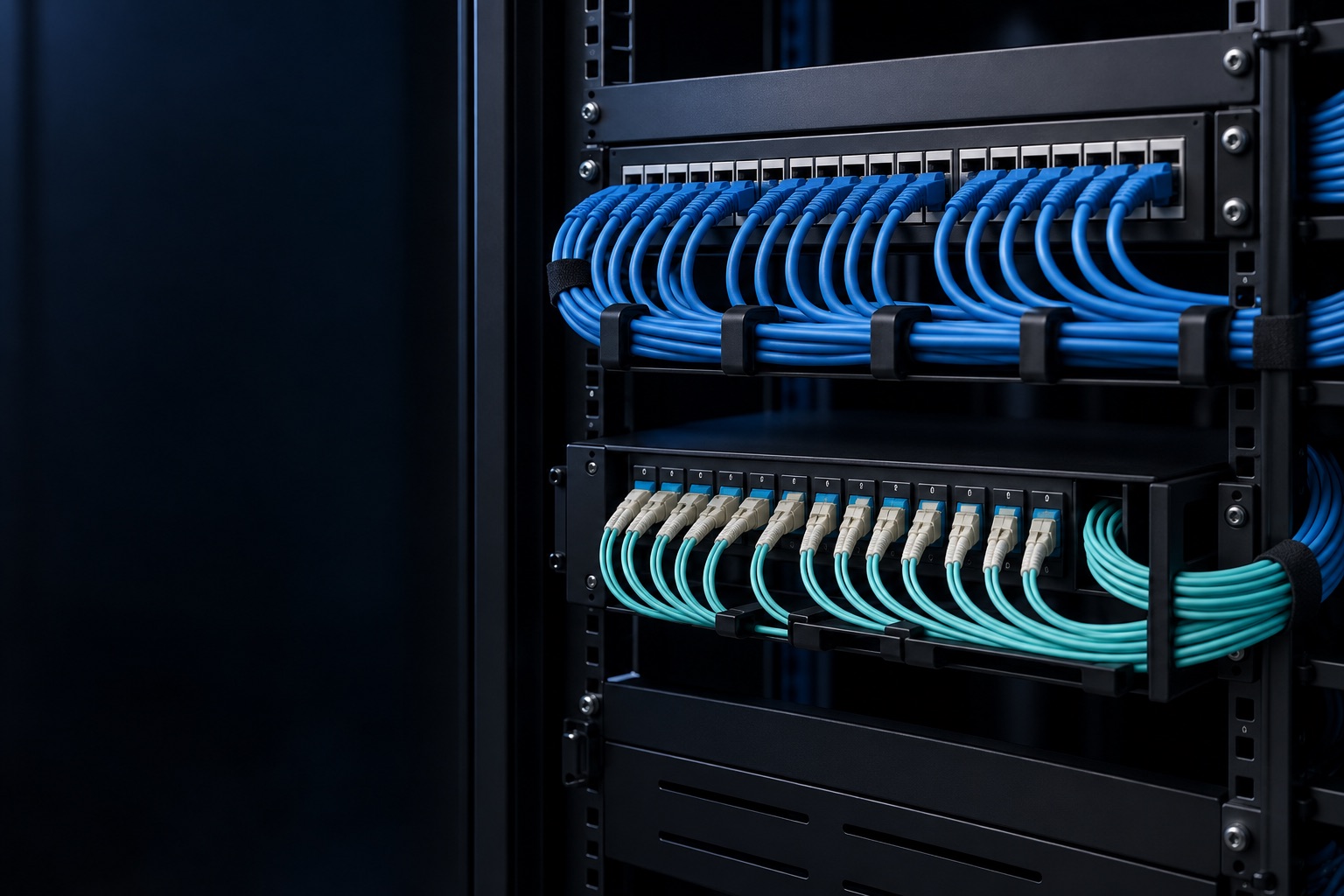
Cabling & fiber
Every access point, camera, phone, and connected station depends on a physical path back to the network. We run it, terminate it, label it, and check it.
What goes wrong
Unlabeled runs, excessive copper distance, damaged pathways, and weak terminations can produce intermittent faults that are difficult to diagnose later.
Every change begins with tracing because neither end is clearly labeled.
Ethernet copper is limited to about 328 feet (100 meters) for the full channel.
A marginal connection may work initially and fail after movement, heat, or time.
What we install
Physical work is scoped separately from network equipment and installation labor so pathways, materials, and site conditions stay visible.
Runs to access points, cameras, phones, jacks, and other approved devices. Mounting is included when the drop is for the device.
Mount, connect, adopt, and test an access point on verified existing infrastructure.
Custom-length duplex multimode runs up to 1,000 feet when a clear conduit path is available.
New fiber work is checked with a visual fault locator and optical power meter. OTDR certification is not offered.
How we scope it
We confirm length, ceiling access, conduit, penetrations, device locations, rack termination, and building access. Fiber without a clear conduit path requires a field estimate.
Materials are separate unless the written scope says otherwise.
Common questions
Sometimes. Existing cabling must be identified and checked before it is included in the final design.
Fiber may be appropriate for long indoor routes, links between floors or network closets, and pathways near electrical interference.
After-hours work can be reviewed when the requested window, access, and building requirements are provided in advance.
Start with the pathway
Add copper, fiber crew hours, rack labor, and quoted power protection in the configurator.